

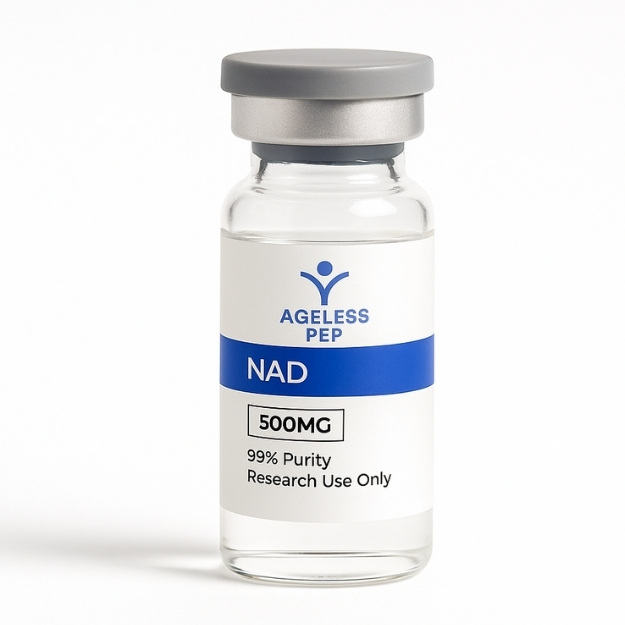
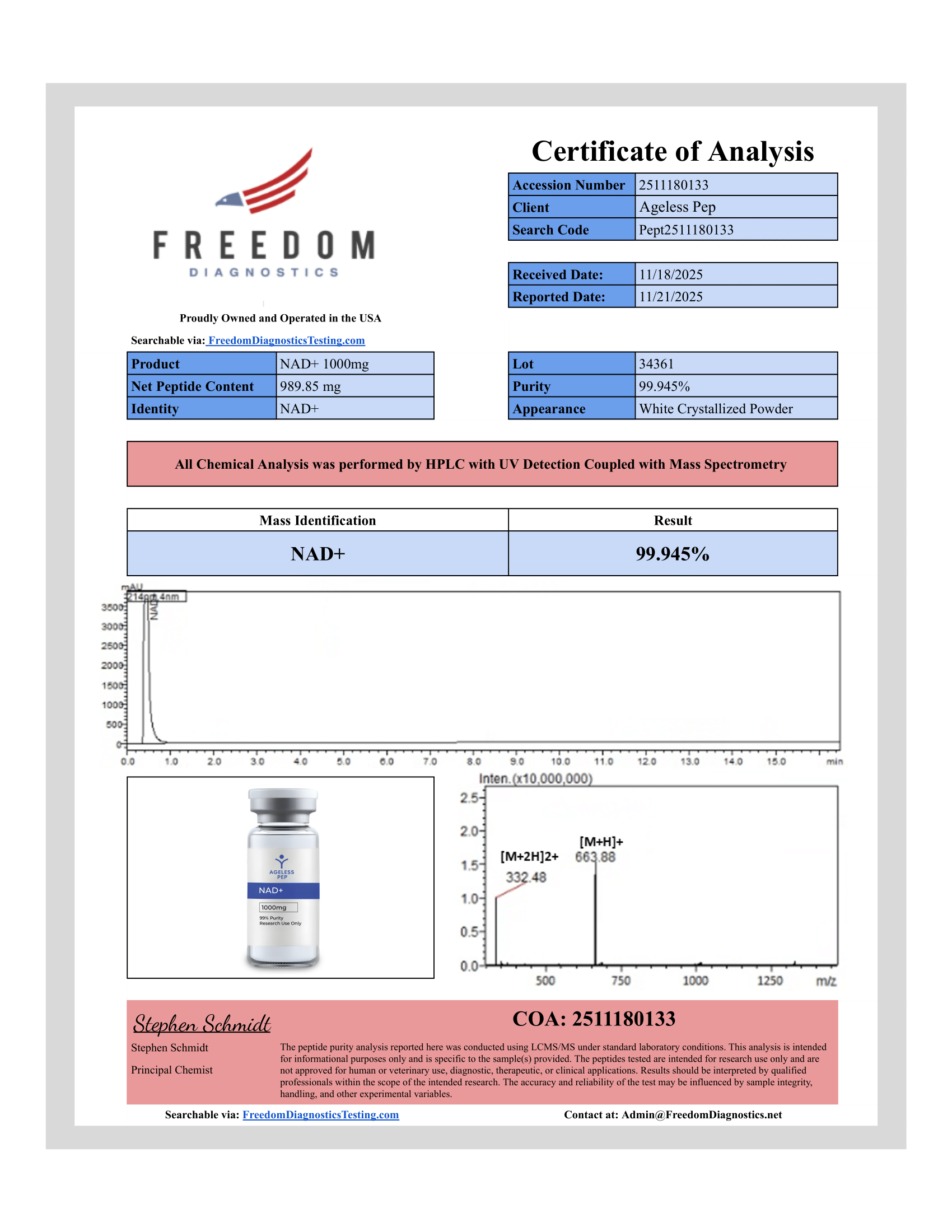
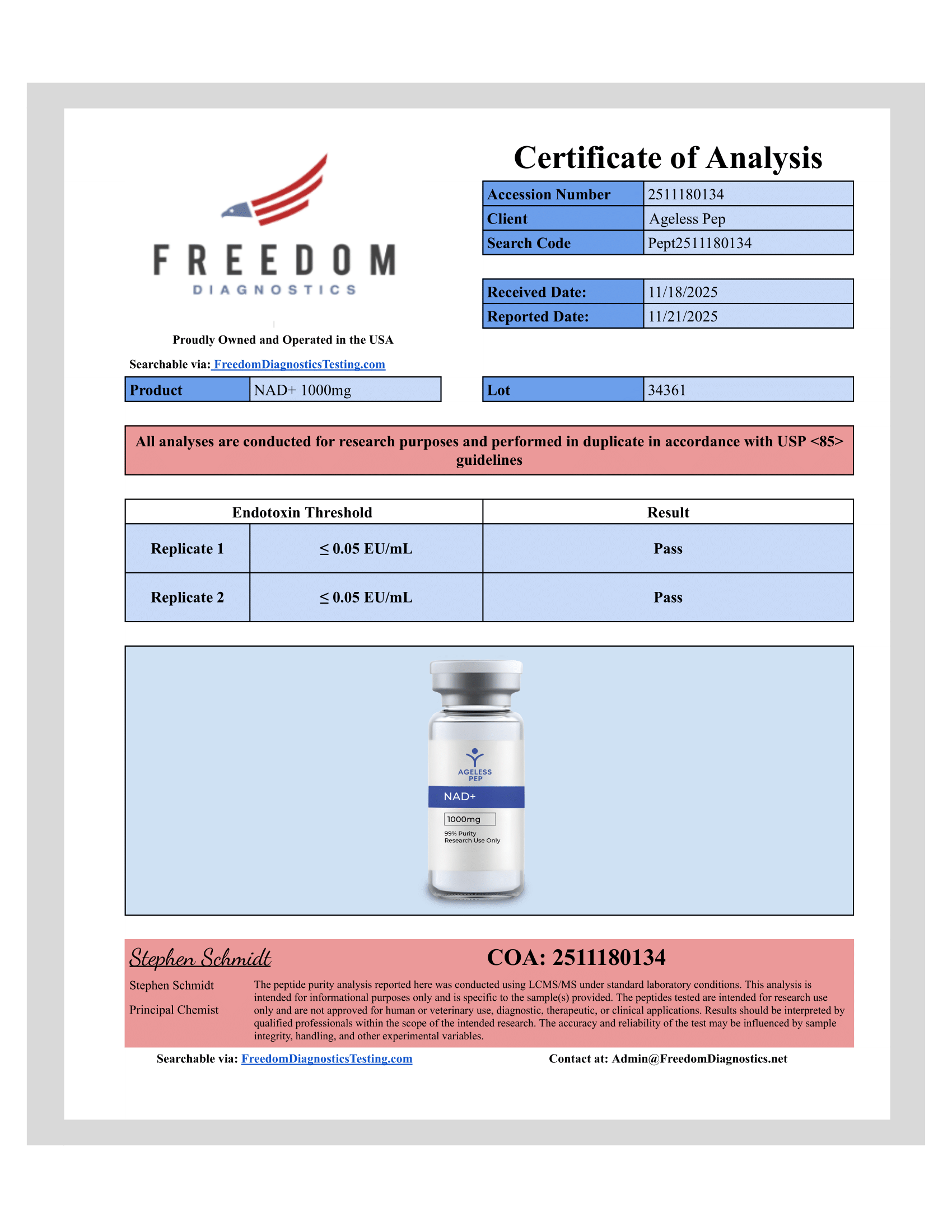
Chemical Name: Nicotinamide Adenine Dinucleotide
Sequence: Not applicable (Dinucleotide; not a peptide)
Molecular Formula: C21H29N7O14P2+2
Molecular Weight: 663.43 g/mol (anhydrous)
PubChem CID: 5893
Solubility: Highly soluble in water (50-100 mg/mL); insoluble in organic solvents like acetone.
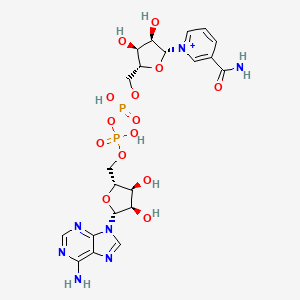
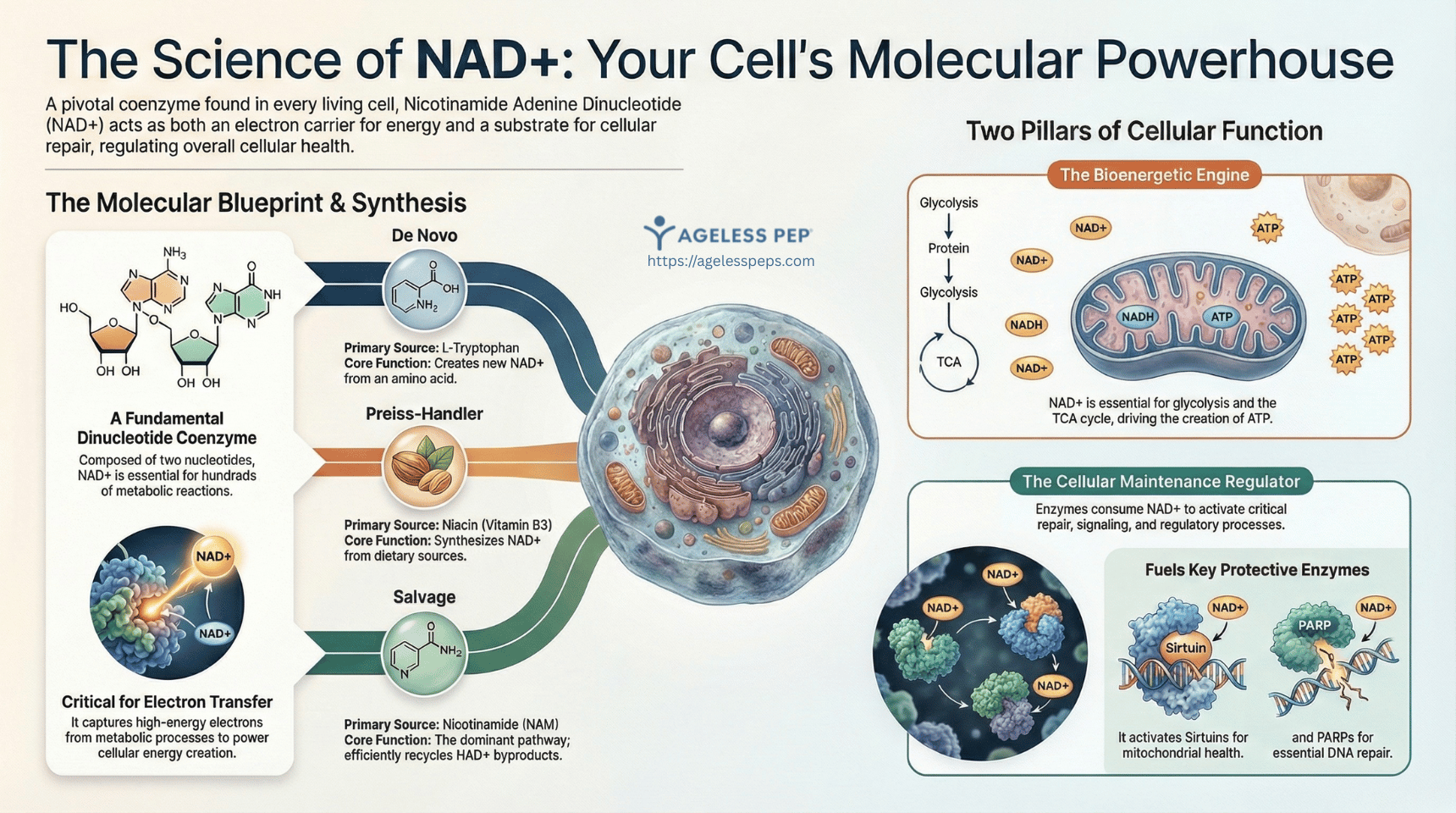
Nicotinamide Adenine Dinucleotide (NAD+) is a pivotal coenzyme ubiquitous in all living cells, functioning as a requisite substrate for critical reduction-oxidation (redox) reactions and as a consumed cofactor in non-redox signaling pathways. It functions by facilitating electron transfer—transitioning between its oxidized (NAD+) and reduced (NADH) forms—enabling the production of ATP within the mitochondrial electron transport chain. Beyond its primary bioenergetic role, it serves as an obligate substrate for enzymes like sirtuins and PARPs, influencing epigenetic regulation and genomic maintenance. Preclinical research utilizes NAD+ to investigate mitochondrial biogenesis, neuro-restoration, age-related metabolic decline, and cellular DNA repair mechanisms.
Note: The following observations are derived exclusively from in-vitro and in-vivo animal models.
Mitochondrial Bioenergetics and Redox Balance NAD+ acts as a primary electron acceptor in glycolysis and the Tricarboxylic Acid (TCA) cycle. In experimental models, the NAD+/NADH ratio serves as a fundamental regulator of metabolic rate; a high ratio signals energy deficit and promotes oxidative metabolism to generate ATP via the electron transport chain.
Epigenetic Regulation and Sirtuin Activation Research focus centers on the absolute dependence of Sirtuins (SIRT1–SIRT7) on NAD+ for catalytic activity. These “longevity genes” couple the hydrolysis of NAD+ to the deacetylation of proteins that regulate mitochondrial biogenesis, circadian rhythms, and inflammatory signaling pathways.
Genomic Integrity and DNA Repair In cellular systems, NAD+ is consumed by Poly(ADP-ribose) polymerases (PARPs) to facilitate DNA damage sensing and repair. Studies investigate how the depletion of NAD+ pools during chronic genotoxic stress can impact cellular survival and the recruitment of DNA repair machinery.
Lyophilized (Powder): Stable at room temperature for shipping. Store at -20°C for long-term stability (up to 2 years).
Reconstituted (Liquid): Store at 2°C–8°C (36°F–46°F). Reconstitution with Bacteriostatic Water is recommended for multi-dose laboratory applications.
Stability: Use within 28 days of mixing. Protect from light and avoid alkaline conditions (pH > 7), as NAD+ undergoes rapid degradation in basic environments.
Our products are made using a freeze-drying (lyophilization) process, which helps keep them stable during shipping for up to 3–4 months.
When the peptide is in its dry powder form, it can be stored at room temperature until you are ready to use it.
Once the peptide is mixed with bacteriostatic water (reconstituted), it should be stored in the refrigerator to maintain freshness and effectiveness. After mixing, the peptide will remain stable for up to 30 days when kept refrigerated.
Freeze-drying works by removing moisture while the peptide is frozen, leaving behind a dry, white powder that stays stable until it is rehydrated. This process helps protect the peptide and extend its shelf life.
After receiving your order, keep peptides away from direct light and heat. If you plan to use them within a few weeks or months, refrigeration below 4°C (39°F) is recommended, though short-term room-temperature storage is generally acceptable for dry peptides.
For long-term storage (several months to years), peptides should be kept in a freezer at −80°C (−112°F) to best preserve their quality and stability.
Discount Applied Successfully!
Your savings have been added to the cart.