

Free Shipping Orders Over $299 Free Shipping Orders Over $299 Free Shipping Orders Over $299 Free Shipping Orders Over $299 Free Shipping Orders Over $299 Free Shipping Orders Over $299 Free Shipping Orders Over $299 Free Shipping Orders Over $299 Free Shipping Orders Over $299
Loading...

Price range: $44.00 through $90.00

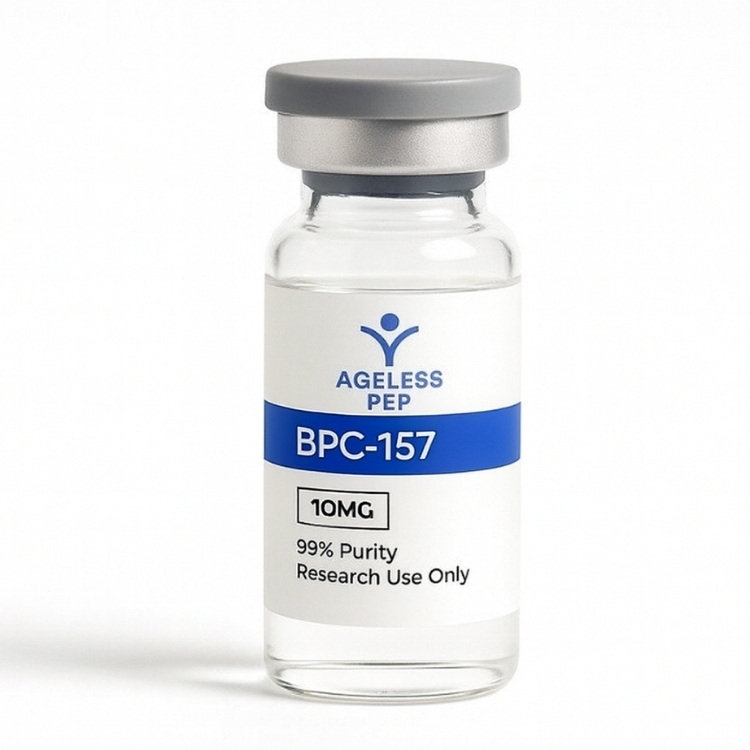
BPC-157 Vial

Price range: $44.00 through $90.00

BPC-157 is a synthetic peptide comprised of 15 amino acids. It is derived from a partial sequence of a large endogenous protein complex known as “Body Protection Compound,” which is naturally isolated from gastric juices.

At Ageless Pep, our BPC-157 is synthesized via solid-phase peptide synthesis to ensure high purity (>99%) for consistent experimental reproducibility. This peptide is widely utilized in research settings as a probe to investigate cell signaling, cytoskeletal organization, and extracellular matrix remodeling7

Mechanism: Promotes angiogenesis (new blood vessel formation) and modulates inflammatory cytokines.

Benefits: Accelerates tissue repair in muscles, tendons, and ligaments. Reduces inflammation. Supports gastrointestinal health.

Price range: $44.00 through $90.00

Disclaimer
Our products are sold in powder form and are typically reconstituted before use. Related materials such as syringes are not provided. Instruction for reconstitution or dosing is not included. These products are intended for research purposes only.

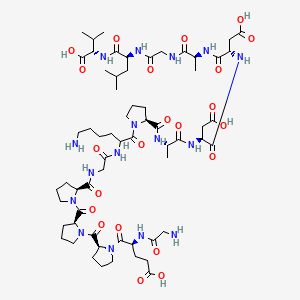
Chemical Identity & Structure

  • Nomenclature: Body Protection Compound-157 (Pentadecapeptide)

  • Sequence: Gly-Glu-Pro-Pro-Pro-Gly-Lys-Pro-Ala-Asp-Asp-Ala-Gly-Leu-Val

  • Molecular Formula: C62H98N16O22

  • Molecular Weight: 1419.5 Da

  • Conformation: Polyproline II (PPII) Helix
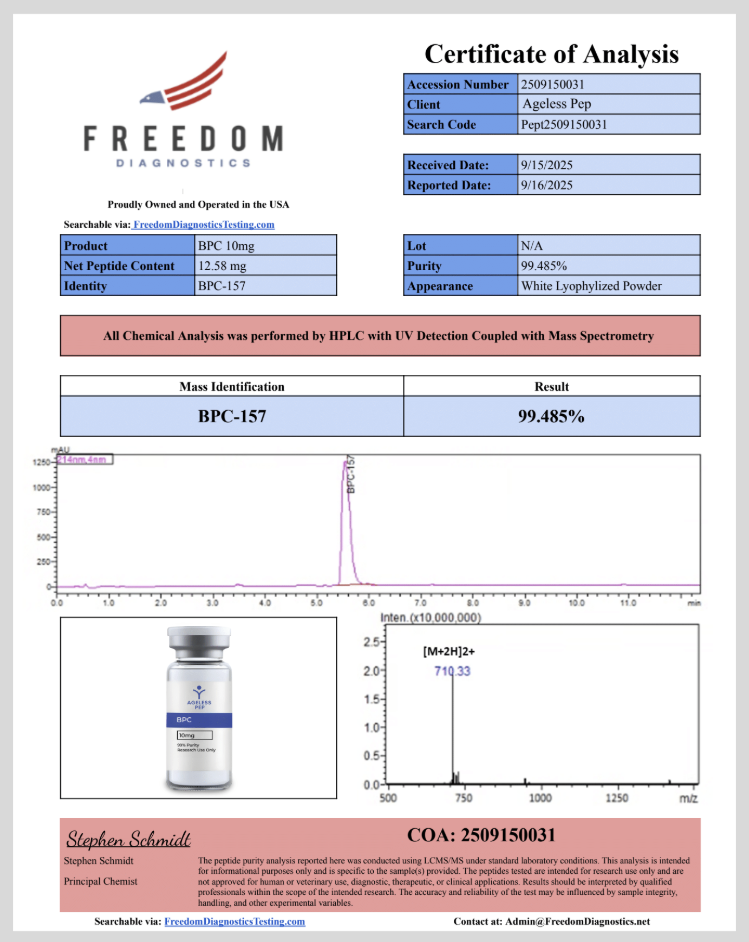
  • Purity: 99.341%

  Structural Profile: Unlike standard alpha-helical peptides, our BPC-157 is characterized by a proline-rich N-terminal motif (Gly-Glu-Pro-Pro-Pro). Computational modeling indicates this sequence induces a Polyproline II (PPII) helix conformation. This extended, left-handed helical structure is thermodynamically stable, preventing the formation of a compact globule and ensuring active sites remain accessible for receptor binding in experimental assays.  

Product Format & Stability

  • Form: Lyophilized (Freeze-Dried) Powder.

  • Gastric Stability: The unique N-terminal glycine and proline clustering shield peptide bonds from protease cleavage, rendering the molecule stable in acidic environments (pH ~3.0) for extended periods.

  • Shipping: The product utilizes a specialized lyophilization process, ensuring it remains stable for shipping at ambient temperatures for 3-4 months.


Pharmacodynamics (Mechanism of Action)

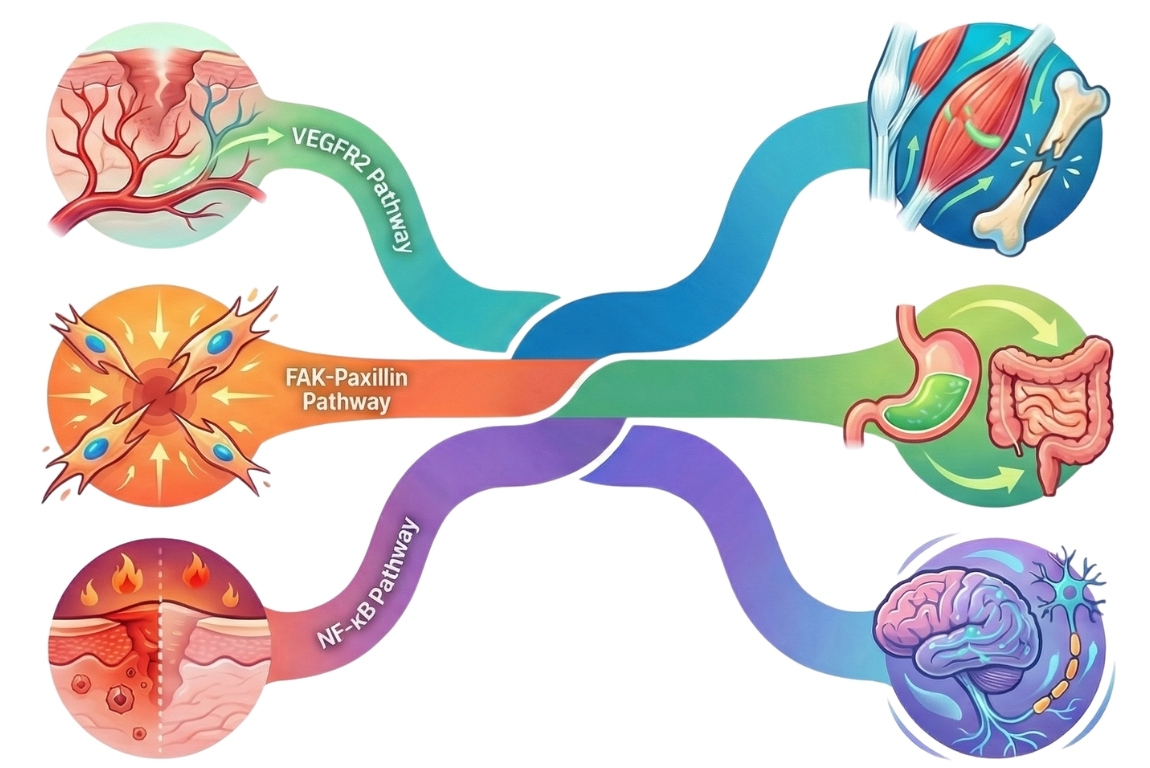
1. Angiogenic Signaling (VEGFR2 / Akt-eNOS) BPC-157 is utilized in research to investigate the re-vascularization of hypovascular tissues.
  • Pathway: Interaction with the Vascular Endothelial Growth Factor Receptor 2 (VEGFR2) triggers the Akt-eNOS signaling axis.

  • Outcome: This cascade results in the phosphorylation of eNOS (endothelial Nitric Oxide Synthase), promoting the local release of Nitric Oxide (NO) and subsequent endothelial cell migration.

2. Cytoskeletal Organization (FAK-Paxillin Axis) Researchers employ this peptide to study cellular migration dynamics fundamental to wound closure.
  • Mechanism: BPC-157 has been shown to stimulate Focal Adhesion Kinase (FAK) and Paxillin.

  • Function: These proteins regulate the assembly of focal adhesions—the mechanical links cells use to adhere to the extracellular matrix (ECM)—thereby enhancing fibroblast migration speed.

3. Gene Expression Modulation In gene profiling assays, BPC-157 is observed to influence the “master switches” of tissue repair:
  • Upregulation: Egr-1 (Early Growth Response 1), Nab2, and Krox-20 (associated with nerve and tissue regeneration).

  • Downregulation: NF-κB (Nuclear Factor kappa B), a primary transcription factor driving the inflammatory cytokine response.
   

Key Areas of Research

1. Angiogenesis and Vascular Dynamics BPC-157 is frequently employed in studies examining vascular recruitment and formation. Research suggests the peptide may interact with the VEGFR2 (Vascular Endothelial Growth Factor Receptor 2) signaling pathway. Experimental data indicates it may modulate the nitric oxide (NO) system, a key regulator of endothelial cell function.

2. Cytoskeletal Organization & Fibroblast Activity In cell culture models, BPC-157 has been observed to influence the phosphorylation of focal adhesion kinase (FAK) and paxillin. These proteins are critical for cell adhesion and migration. Researchers utilize BPC-157 to study how fibroblasts (connective tissue cells) proliferate and migrate during the remodeling of the extracellular matrix.

3. Tissue Remodeling (Tendon, Ligament, Muscle) Preclinical literature has extensively documented BPC-157 in rodent models regarding the structural integrity of connective tissues. It is a common subject of study in experimental models of tendon and ligament damage, specifically looking at how the peptide influences the timeline of tissue organization and collagen alignment.

4. Gastric and Intestinal Integrity Derived originally from gastric proteins, BPC-157 is a primary candidate in research exploring gastrointestinal mucosal integrity. Studies often focus on its potential role in mitigating oxidative stress markers in gut tissue models


Storage Instructions

To maintain structural integrity and experimental consistency:

  • Lyophilized (Powder): Store at room temperature (cool, dark place) for up to 90 days. For long-term storage (6+ months), keep at -20°C to -80°C.

  • Reconstituted (Liquid): Once mixed with bacteriostatic water, the solution must be stored at 4°C (39°F).

  • Shelf Life (Liquid): Reconstituted peptides degrade over time; use within 30 days of mixing. Avoid repeated freeze-thaw cycles to prevent degradation of the peptide bonds.


Legal Disclaimer

FOR INFORMATIONAL AND EDUCATIONAL PURPOSES ONLY. The products offered by Ageless Pep are furnished for in-vitro studies only. The information above serves to describe the chemical characteristics and mechanistic properties observed in laboratory settings. These products are not medicines or drugs and have not been approved by the FDA to prevent, treat, or cure any medical condition, ailment, or disease.  

Storage Instructions

Our products are made using a freeze-drying (lyophilization) process, which helps keep them stable during shipping for up to 3–4 months.

When the peptide is in its dry powder form, it can be stored at room temperature until you are ready to use it.

Once the peptide is mixed with bacteriostatic water (reconstituted), it should be stored in the refrigerator to maintain freshness and effectiveness. After mixing, the peptide will remain stable for up to 30 days when kept refrigerated.

Freeze-drying works by removing moisture while the peptide is frozen, leaving behind a dry, white powder that stays stable until it is rehydrated. This process helps protect the peptide and extend its shelf life.

After receiving your order, keep peptides away from direct light and heat. If you plan to use them within a few weeks or months, refrigeration below 4°C (39°F) is recommended, though short-term room-temperature storage is generally acceptable for dry peptides.

For long-term storage (several months to years), peptides should be kept in a freezer at −80°C (−112°F) to best preserve their quality and stability.

Important: All peptides offered are intended for in-vitro and pre-clinical research only. Not for human use. Not approved by the US FDA for medical conditions.

Peptides are short chains of amino acids, typically under 50 residues, whereas proteins are much longer and fold into complex structures.
Because peptides are smaller, they tend to:

  • Bind more selectively to receptors

  • Have faster biological signaling effects

  • Be easier to synthesize and modify for research
    This makes them ideal for targeted experiments in regeneration, metabolism, and cellular communication.

  • Ageless Pep provides high-purity, lab-tested research peptides.

  • The team is dedicated to scientific accuracy and excellent customer support.

  • The platform serves a community of researchers and scientists committed to innovation.

Depending on the study design, peptides can be researched through:

  • In-vitro assays

  • Animal models

  • Cell cultures

  • Subcutaneous or intravenous administration (in animals)

Each peptide behaves differently — for example, Semaglutide and Tirzepatide are studied via subcutaneous injections, while others like BPC-157 show effects even when administered orally or parenterally in rodent studies.

Peptides generally require:

  • Cool, dry storage when lyophilized

  • Refrigeration after reconstitution

  • Protection from UV light and temperature fluctuations

This preserves molecular integrity, preventing oxidation or breakdown of amino-acid chains.
Proper storage ensures reproducibility of experimental results.

High-quality research peptides often exceed 98–99% purity, validated through HPLC and Mass Spectrometry.
The guide notes Ageless Pep’s commitment to lab-tested, high-purity peptides verified through strict protocols.
Peptide bioavailability depends on:
  • Molecular weight
  • Receptor affinity
  • Use of fatty-acid modifications (e.g., GLP-1 di-acid component for long-acting effects)
  • PEGylation to extend half-life (e.g., PEG-MGF)
  • Route of administration
  • Enzyme resistance (e.g., BPC-157’s stability in gastric acid)
Peptides like GLP-1 and GLP-2 activate GLP-1 and GIP receptors, influencing:
  • Appetite regulation
  • Insulin secretion
  • Gastric emptying
  • Blood glucose stabilization
  • Energy expenditure
Multiple clinical trials cited in the guide show significant reductions in HbA1c, body weight, and cardiometabolic markers
Depending on the study design, peptides can be researched through:
  • In-vitro assays
  • Animal models
  • Cell cultures
  • Subcutaneous or intravenous administration (in animals)
Each peptide behaves differently — for example, GLP-1, GLP-2 AND GLP-3 are studied via subcutaneous injections, while others like BPC-157 show effects even when administered orally or parenterally in rodent studies.

Our products are made using a freeze-drying (lyophilization) process, which helps keep them stable during shipping for up to 3–4 months.

When the peptide is in its dry powder form, it can be stored at room temperature until you are ready to use it.

Once the peptide is mixed with bacteriostatic water (reconstituted), it should be stored in the refrigerator to maintain freshness and effectiveness. After mixing, the peptide will remain stable for up to 30 days when kept refrigerated.

Freeze-drying works by removing moisture while the peptide is frozen, leaving behind a dry, white powder that stays stable until it is rehydrated. This process helps protect the peptide and extend its shelf life.

After receiving your order, keep peptides away from direct light and heat. If you plan to use them within a few weeks or months, refrigeration below 4°C (39°F) is recommended, though short-term room-temperature storage is generally acceptable for dry peptides.

For long-term storage (several months to years), peptides should be kept in a freezer at −80°C (−112°F) to best preserve their quality and stability.

Get 5% off on your First order

Join our newsletter to receive a beginner’s guide plus an exclusive 5% discount!