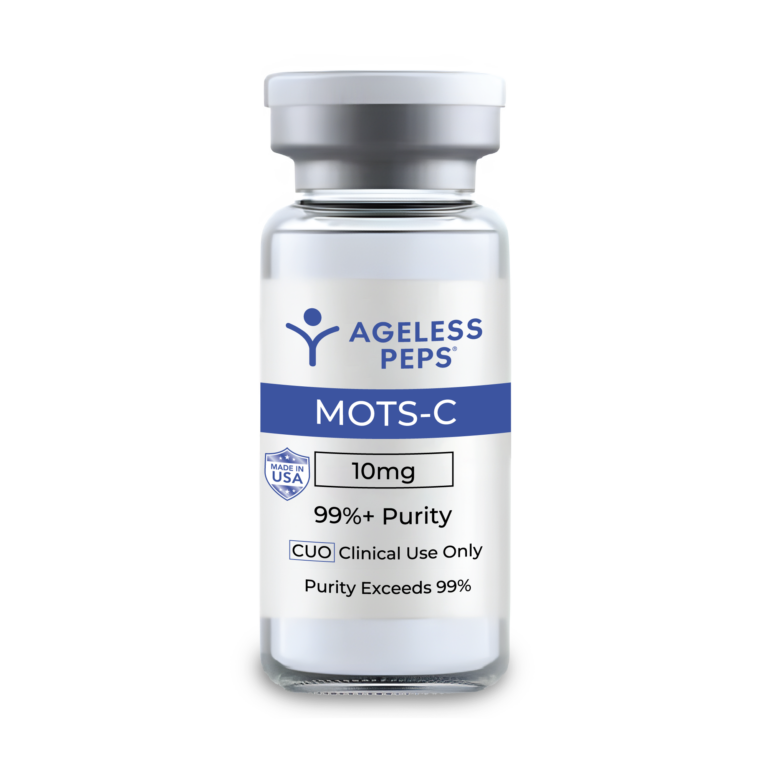
MOTS-C: The Mitochondrial Peptide Redefining Cellular Energy and Longevity Science
In the evolving narrative of longevity research, most attention has historically gone to telomeres, sirtuins, or stem cells. Yet recently, a quiet revolution has emerged from an unexpected source — the mitochondria. Once known simply as the “powerhouses of the cell,” mitochondria are now recognized as signaling organelles with their own genetic language. At the center of this paradigm shift lies a small peptide called MOTS-C.
MOTS-C is rewriting how scientists think about energy regulation, metabolism, and aging. Unlike peptides coded by the nuclear genome, MOTS-C originates within the mitochondrial DNA itself — revealing how mitochondrial signals communicate with the rest of the body. It’s more than a molecule; it’s a bridge between mitochondrial metabolism and systemic adaptation.
But how does it work? Why are researchers calling it one of the most intriguing peptides in modern biomedicine? Let’s explore the science behind MOTS-C.
What is MOTS-C?
MOTS-C stands for Mitochondrial Open Reading Frame of the 12S rRNA-c. It’s a short, 16-amino-acid peptide encoded by mitochondrial DNA — not nuclear DNA — a small but significant distinction.
Unlike nuclear-derived peptides, MOTS-C arises from a mitochondrial gene but acts throughout the cell, crossing into the nucleus to influence gene expression and connect the cell’s energy systems with broader metabolic networks.
Snippet definition: MOTS-C is a naturally occurring mitochondrial-derived peptide that helps regulate metabolism and cellular stress responses by modulating energy pathways.
Discovered in 2015 by a research team at USC, MOTS-C became one of the first peptides shown to originate from mitochondrial DNA yet exert wide-reaching effects on glucose use, fat metabolism, and stress adaptation.
The Science Behind MOTS-C: A Mitochondrial Messenger
MOTS-C functions as a metabolic modulator, sensing energy states and orchestrating adaptive responses that maintain metabolic homeostasis.
It primarily acts through the AMPK pathway — the cell’s energy sensor that boosts glucose uptake and fat oxidation while limiting energy-consuming processes when cellular fuel is low.
Research indicates that MOTS-C activates AMPK, improving energy use and adaptability to nutritional or oxidative stress. This influences metabolic health, endurance, and potentially aging.
- Improves insulin sensitivity and glucose regulation
- Increases endurance during exercise
- Promotes metabolic flexibility
- Enhances resilience to cold, fasting, and other stressors
How MOTS-C Works: From Mitochondria to Metabolic Signal
MOTS-C is encoded in the mitochondrial 12S rRNA region. Once expressed, the peptide accumulates in the cytoplasm and travels to the nucleus to influence genes tied to metabolism and stress adaptation.
Think of it as a relay race — mitochondria pass a molecular “baton” to the nucleus. MOTS-C is that baton, linking metabolic status with genetic adaptation.
Documented effects include:
- Activation of AMPK signaling – promoting energy balance and fat oxidation.
- Modulation of folate and methionine metabolism – supporting methylation and antioxidant defense.
- Upregulation of adaptive stress genes – protecting against metabolic dysfunction and oxidative damage.
Science
MOTS-C essentially helps cells “learn” to withstand stress more effectively, positioning it as a potential resilience factor in metabolism.
A Brief Timeline of MOTS-C Discovery and Research
- 2015: Nakahira et al. identify MOTS-C as a mitochondrial-derived peptide with systemic metabolic effects.
- 2016–2019: Preclinical studies reveal benefits in obesity and endurance models.
- 2020–2021: Human data suggest MOTS-C levels decline with age.
- 2022–2023: Early clinical studies test MOTS-C’s exercise and metabolic roles.
Comparing MOTS-C with Other Peptides
| Feature | MOTS-C | Humanin | SS-31 |
|---|
| Genetic Origin | Mitochondrial DNA (12S rRNA region) | Mitochondrial DNA (16S rRNA region) | Synthetic analog |
| Primary Focus | Metabolic homeostasis | Cytoprotection | Mitochondrial stabilization |
| Key Pathway | AMPK activation, folate metabolism | IGF-1 modulation | Permeability pore inhibition |
| Research Stage | Early clinical | Advanced preclinical | Preclinical |
Reflections on the Mitochondrial Renaissance
Mitochondria, once free-living bacteria, evolved into partners in human physiology. MOTS-C echoes that evolutionary bond, revealing mitochondria as active participants in cellular communication, not passive energy units.
MOTS-C and Aging: The Longevity Connection
Aging reflects declining cellular energy and resilience. In animals, MOTS-C levels drop with age, and supplementation restores youthful metabolic patterns. It boosts oxidative metabolism, preserves insulin sensitivity, and enhances activity in older models.
Human work remains preliminary, examining whether declining MOTS-C correlates with aging biomarkers or disease risk. It’s not about reversing aging, but supporting energetic balance for healthier aging.
Limitations of Current Research
Key challenges include:
- Small human sample sizes
- Limited long-term safety data
- Incomplete understanding of tissue-specific actions
- Need for standardized measurements
Summary of Current Uncertainties
- Rodent-to-human translation is incomplete.
- Optimal intervention timing unknown.
- Cross-talk with other peptides remains under study.
- Chronic effects require further mapping.
Limitations
Research on MOTS-C is still early-stage, and findings should be interpreted with caution until validated in larger human studies.
The Exercise Connection
During exercise, MOTS-C levels in muscle and circulation rise, supporting energy turnover. In mice, it improves endurance by boosting glucose utilization and delaying fatigue.
This suggests MOTS-C may be one of the body’s natural mediators of exercise adaptation — though confirmation in humans is still underway.
What We Still Don’t Know
- What regulates MOTS-C under fasting or stress?
- Does it affect cognition by crossing the blood–brain barrier?
- How do mitochondrial mutations influence MOTS-C signaling?
- Could variation in MOTS-C explain individual metabolic differences?
Looking Ahead: The Future of Mitochondrial Peptides
MOTS-C leads the way in the study of mitochondrial-derived signaling molecules. These peptides reveal mitochondria as dynamic sensors that broadcast systemic metabolic health.
Future research may define MOTS-C as a biomarker, a therapeutic target, or part of a broader mitochondrial “language” coordinating cellular balance.
Key Takeaways
- MOTS-C is a mitochondrial-derived peptide that regulates metabolism and stress responses.
- It activates AMPK and influences nuclear genes, bridging energy sensing with genetic control.
- Preclinical work shows improved metabolism and endurance; human studies remain early.
- Long-term effects and mechanisms need full investigation.
- MOTS-C symbolizes a shift toward understanding mitochondrial communication in longevity.
FAQs About MOTS-C
What does MOTS-C stand for?
MOTS-C stands for “Mitochondrial Open Reading Frame of the 12S rRNA-c.” It's a mitochondrial peptide that regulates metabolism and stress adaptation.
How does MOTS-C work in the body?
It activates AMPK and modulates metabolic pathways that enhance glucose and fat use during stress or exercise.
Is MOTS-C naturally produced in humans?
Yes. It’s encoded in mitochondrial DNA and expressed in many tissues, though levels may decline with age.
Is MOTS-C the same as Humanin?
No. Both come from mitochondrial DNA but differ in function: Humanin protects cells, while MOTS-C influences metabolism.
What are the main MOTS-C benefits being studied?
Metabolic balance, endurance, mitochondrial signaling, and cellular resilience.
Are there human clinical trials on MOTS-C?
Only early-stage human studies exist. Larger trials are needed for confirmation.
Does MOTS-C have side effects?
No major side effects reported, but long-term human safety data remain limited.
Can MOTS-C slow aging?
No evidence shows that MOTS-C reverses aging. It may support metabolic processes linked to healthy aging.
Final Reflection
Science advances by asking better questions. The discovery of MOTS-C opened one of the most profound: how do mitochondria communicate with the rest of the cell? MOTS-C may not be the final answer, but it’s a key piece in linking cellular energy to longevity, reminding us that inside every cell, the whispers of mitochondria still guide our vitality.
References
- Lee C et al. Cell Metabolism. 2015. “Mitochondrial-Derived Peptide MOTS-c Promotes Metabolic Homeostasis and Reduces Obesity and Insulin Resistance.”
- Yang S et al. Aging Cell. 2019. “MOTS-c Enhances Cellular Metabolic Flexibility via AMPK Activation and Folate Pathway Modulation.”
- Reynolds JC et al. Nature Communications. 2021. “Decline of Mitochondrial Peptide MOTS-c with Age and Its Associations with Human Longevity.”
- Park J et al. Cell Reports. 2020. “Metabolic Adaptations Mediated by MOTS-c in Aging and Exercise.”
Disclaimer
This article is for educational purposes only and not medical advice. Research on MOTS-C is ongoing, and findings should be viewed in the context of evolving evidence.